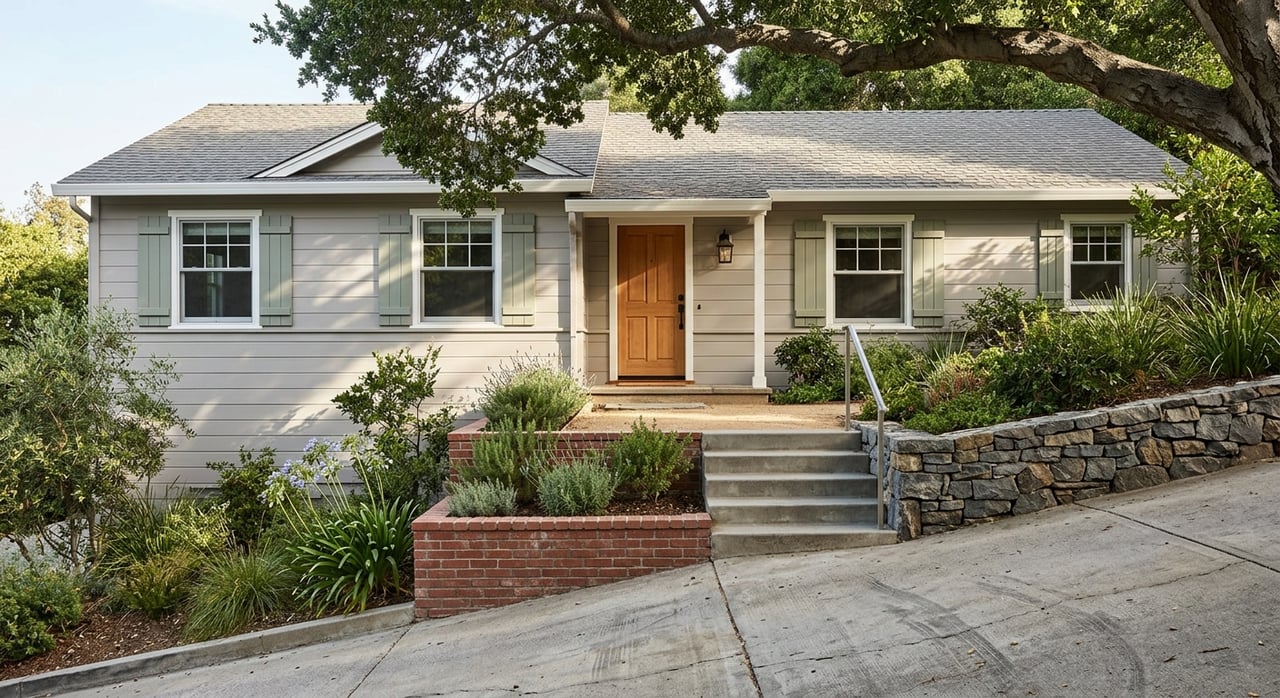
Trying to decide whether Orinda’s hills or its village core fit your lifestyle better? It is a smart question, because these two settings can feel very different even within the same city. If you are comparing privacy, views, walkability, commute access, and long-term upkeep, this guide will help you weigh the tradeoffs with more confidence. Let’s dive in.
Orinda has two distinct living patterns
Orinda is a semi-rural city in southwest Contra Costa County, and its downtown is divided by Highway 24 into the Village District on the north side and the Theatre District on the south side. The city’s planning framework treats the downtown core as a low-density, small-scale, low-rise village environment. Hillside and ridgeline areas are treated as a separate planning setting with different development concerns.
That matters when you are house hunting. A home near the village often competes on convenience and access. A home in the hills often stands out for privacy, lot setting, and topography-driven character.
Village living offers convenience first
If your day-to-day routine depends on easy access, the village area may feel like the practical choice. Orinda Station at 11 Camino Pablo serves the Antioch to SFIA/Millbrae line, which makes the downtown area especially relevant for commuters. Downtown Orinda also has a Walk Score of 82, which Redfin classifies as very walkable.
That kind of location can change how you use your time. You may be able to rely less on the car for errands or transit access. For some buyers, that convenience is the biggest lifestyle upgrade of all.
What village buyers should think about
The city’s General Plan puts a strong focus on sidewalks, pedestrian routes, and more efficient downtown circulation. At the same time, it also notes severe parking and circulation problems in the core. In other words, convenience is real, but so are the limits that come with a compact area.
If you are considering a village home, pay close attention to:
- Parking availability
- Traffic flow at busy times
- How close you want to be to BART and downtown activity
- Whether future downtown changes could affect your block or views
The last point is important. In November 2025, the City Council rezoned 26 downtown housing-element sites for mixed-use and multifamily residential development, which means the village area may evolve more over time than some hillside neighborhoods.
Hillside living offers space and setting
If you picture a home with more separation from neighbors, a more dramatic lot, or a stronger connection to the landscape, hillside living may appeal to you more. In Orinda, the city’s planning framework clearly treats hillsides and ridgelines differently from the village core. Density is expected to decrease as slope increases, and development is generally discouraged on steeper slopes and ridges.
That creates a very different feel from downtown living. Hillside homes often attract buyers who value views, privacy, and site character. Those benefits can be meaningful, but they usually come with more property-specific homework.
What hillside buyers should expect
On more challenging sites, the city expects design solutions that respond to the land itself. Floor elevations may need to step with the hillside, foundations may cut into the slope, and ridgeline character and scenic vistas are expected to be preserved. That means the lot is not just background. It becomes part of the decision.
Hillside homes often involve more review and more due diligence. Orinda’s residential design-review application specifically flags ridgeline-overlay parcels and sites with average slopes of 20 percent or more. New homes require soils or geotechnical reports, and the city also has a dedicated Hillside Grading Permit application.
For a buyer, that does not automatically mean “avoid the hills.” It means you should understand the site before you commit. A beautiful lot can also come with drainage, grading, retaining, and access considerations that matter long after closing.
Maintenance looks different in each area
One of the biggest real-world differences between village and hillside living is ongoing maintenance. A village-area property may put more emphasis on shared access, traffic patterns, and parking realities. A hillside property may ask more of you in terms of land management and drainage awareness.
The city’s Public Works department maintains public storm drains and responds to flooding and landslides, but owners are responsible for driveway culverts, v-ditches, and other drainage features on private property. That is a key ownership issue on sloped parcels. If a home sits on a hillside lot, private drainage systems deserve careful review.
A simple comparison
| Lifestyle Factor | Village Living | Hillside Living |
|---|---|---|
| Daily access | Strong access to downtown and BART | Often more car-dependent |
| Walkability | Higher, especially downtown | Usually lower due to terrain |
| Parking and circulation | Can be constrained | Depends on driveway and street access |
| Lot character | More compact, convenience-focused | More privacy, views, and varied topography |
| Property due diligence | Focus on parking and future downtown change | Focus on slope, drainage, grading, and retaining features |
| Long-term change | More likely in the core due to rezoning | Often more stable in pattern, but site-specific limits apply |
Wildfire risk is a citywide issue
No matter where you buy in Orinda, wildfire risk needs to be part of your thinking. The city says many parts of Orinda are in high fire hazard severity zones, and the Moraga-Orinda Fire District is identified as a Wildland Urban Interface community. Local risk is shaped by steep terrain, dense vegetation, critical fire-weather conditions, and wind and ember exposure.
For hillside homes, those factors can feel more immediate because of the terrain and proximity to open space. But wildfire exposure is not just a hillside issue. It is a citywide factor that should be part of your planning, budgeting, and comfort level.
Red Flag access matters in the hills
Access can become more complicated during Red Flag conditions. Orinda has no-parking or stopping restrictions on several hillside streets, including parts of Sleepy Hollow, Miner Road, Lombardy Lane, Honey Hill Road, Charles Hill Road, El Toyonal, and Loma Vista. If you are looking in the hills, it is worth understanding how those restrictions could affect guests, daily routines, or emergency access.
This is one reason practical site review matters so much. A home can be beautiful on paper, but driveway grade, street width, and evacuation practicality are part of real livability.
Market differences can be significant
Orinda’s micro-markets do not all move the same way. In March 2026, Orinda overall had a median sale price of $2.265 million and homes sold in about 11 days. Downtown Orinda showed a median sale price of $1.29 million and 38 days on market, while Sleepy Hollow showed $2.45 million and 7 days on market.
These are not direct apples-to-apples comparisons. Still, they show how strongly access, lot utility, and buyer pool can influence pricing and pace within one city. In practical terms, village-area homes may attract buyers focused on convenience and transit, while hillside homes may attract buyers prioritizing views, privacy, and architectural or site quality.
How to choose the right fit for you
If you are torn between the two, start with your weekly routine instead of the listing photos. The right answer usually depends on how you want to live, not just what looks best online. Your commute, comfort with maintenance, and tolerance for topography all matter.
Choose village living if you value:
- Easier access to BART
- A more walkable daily routine
- Closer proximity to shops and services
- A lower-maintenance lot setup compared with a steep hillside parcel
Choose hillside living if you value:
- More privacy
- Views or a stronger natural setting
- A larger or more distinctive lot feel
- A home where site character is part of the appeal
Smart due diligence before you offer
Before writing an offer, confirm how the parcel fits into Orinda’s planning context. The city’s guidance makes it important to know whether a property sits in the Village District, a ridgeline overlay, or a severely sloped area. Those details can affect what the city requires for design review, grading, and drainage.
For village homes, focus your review on parking, traffic flow, and the potential for future downtown change. For hillside homes, pay close attention to driveway grade, retaining walls, defensible space, and evacuation practicality. Those issues may not always show up in the first showing, but they can shape your ownership experience in a big way.
When you are buying or selling in a place with this much variation, local guidance matters. A home near downtown and a home on a steep lot may both be in Orinda, but they can require very different strategies. If you want a practical, local perspective on how to evaluate the tradeoffs, connect with Amanda Lesser for a thoughtful game plan.
FAQs
What is the main difference between village and hillside living in Orinda?
- Village living centers on walkability, transit access, and daily convenience, while hillside living is more often about privacy, views, and lot setting.
What should buyers check before buying a hillside home in Orinda?
- Buyers should review slope conditions, drainage features, driveway grade, retaining walls, defensible space, and whether the parcel may be subject to ridgeline or hillside review requirements.
What should buyers check before buying near downtown Orinda?
- Buyers should pay close attention to parking, circulation, proximity to BART, and the possibility of future downtown change tied to rezoned mixed-use and multifamily sites.
Is wildfire risk only a hillside issue in Orinda?
- No. The city identifies wildfire exposure as a citywide factor, although steep terrain, vegetation, and open-space conditions can make it feel more pronounced in some hillside areas.
Do home prices differ between downtown Orinda and hillside neighborhoods?
- Market snapshots suggest they can differ significantly, with downtown Orinda and hillside areas such as Sleepy Hollow showing different median prices and days on market in March 2026.