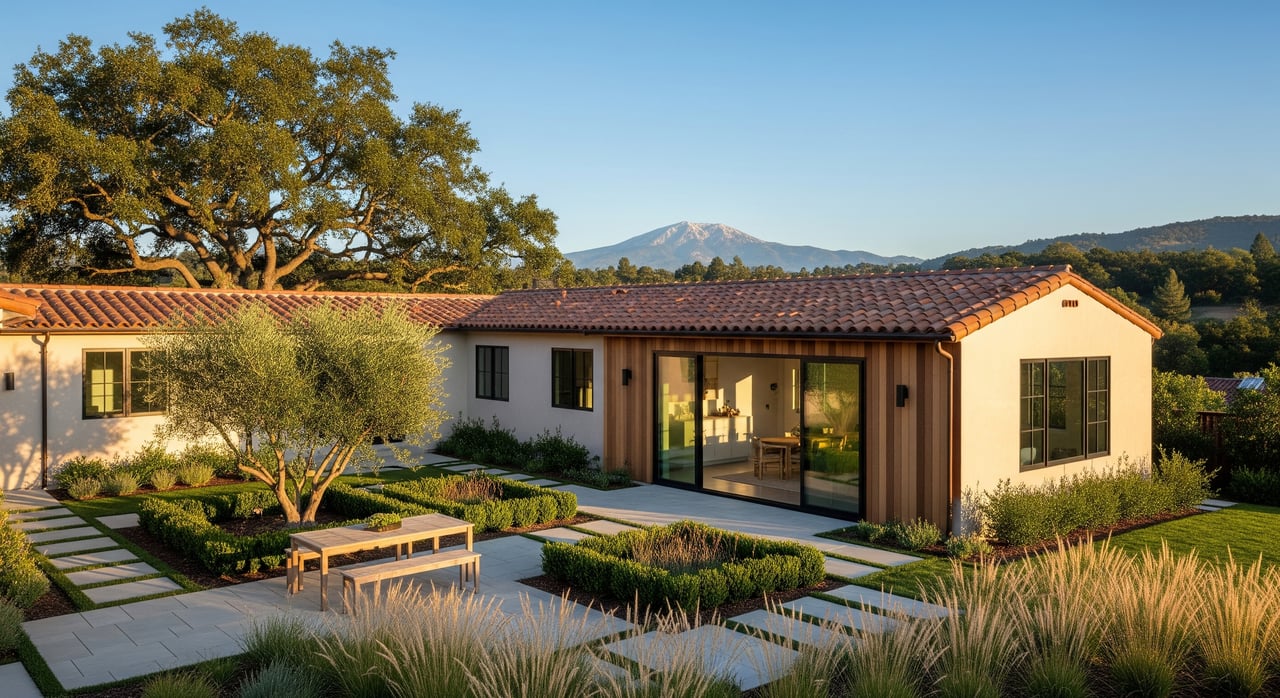
Thinking about building an ADU on your Walnut Creek property, but not sure where to start? You’re not alone. Between state law and local rules, it can feel like a maze. The good news is you can navigate it with a clear plan. In this guide, you’ll learn how ADUs work in Walnut Creek, what California law guarantees, what to expect during permitting, and smart tips to protect value and keep the process smooth. Let’s dive in.
What counts as an ADU or JADU
An accessory dwelling unit is a separate, smaller dwelling on the same lot as a primary home. You’ll see four common formats:
- Detached ADU: a new, standalone backyard cottage.
- Attached ADU: an addition that connects to your main home.
- Conversion ADU: a living space created from existing space like a garage, basement, or bonus room.
- Junior ADU, or JADU: a small unit created from interior space in the primary home, typically with an efficiency kitchen.
Walnut Creek’s Planning Division and municipal code spell out exact definitions, eligible zones, and standards. Since ADU rules evolve, always confirm terms and current forms on the city’s Planning and Building pages before you begin.
State law sets the baseline
California law gives every eligible single-family and multifamily lot a path to build ADUs with ministerial review. That means your ADU application must be evaluated against objective standards without a discretionary hearing. State statutes also limit what cities can require for parking, owner-occupancy, height, setbacks, and processing time.
- The core ADU statute is California Government Code section 65852.2. You can read the current text for statewide rights and limits in that section. See the state statute in California Government Code section 65852.2.
- JADUs are addressed in Government Code section 65852.22.
- The California Department of Housing and Community Development (HCD) publishes plain-language ADU guidance and FAQs that summarize how state law applies across cities. Review HCD’s overview at the HCD ADU resource page.
Your project in Walnut Creek must comply with both state law and the city’s objective standards. When the two conflict, state law generally preempts.
Size and how many you can build
Exact square footage limits for detached, attached, and conversion ADUs are set in Walnut Creek’s zoning standards and ADU handouts. These numbers can change, so check the city’s current guidance before you design.
Here is how to approach sizing:
- Start with your lot’s zoning district. Objective standards like maximum floor area and lot coverage may apply, but state law puts guardrails on how those standards can limit ADUs.
- If you plan a converted ADU within existing space, different rules may apply than for new construction.
- JADUs have their own maximum size and kitchen requirements under state law. Walnut Creek’s handouts will clarify local implementation and whether you can pair a JADU with a separate ADU on the same lot.
Ask Planning to confirm whether your lot can host both a JADU and a detached or attached ADU and how the size caps interact.
Setbacks, height, and lot coverage
Walnut Creek’s municipal code establishes numeric setbacks and height limits for ADUs. Some projects qualify for reduced setbacks or special allowances under state law, especially conversion ADUs and certain small detached units. Your designer should map the buildable area on a current site plan.
Keep these points in mind:
- Detached and attached ADUs can have different setback and height rules.
- Conversion ADUs that stay within the existing building envelope often have more flexible setbacks.
- Lot coverage or FAR rules cannot be used to effectively block an ADU where state protections apply. Your planner can explain how the city applies these limits.
Because these are numeric standards, verify the exact measurements on the city’s ADU handout or code section before finalizing plans.
Parking and driveway rules
California law sharply limits when cities can require new off-street parking for ADUs. Under state rules summarized by HCD, many ADUs are exempt from new parking requirements, including when the ADU is within a half mile of public transit or created from an existing structure. Also, if you convert a garage or carport to an ADU, cities cannot require you to replace those lost parking spaces elsewhere on the property. For a helpful statewide summary, review HCD’s guidance on the HCD ADU resource page.
Walnut Creek may also allow tandem or compact parking solutions where parking is required. If your street has a residential permit program, ask Planning how that interacts with ADU parking. Confirm any parking standards and exemptions with the city before you design the site plan.
Owner-occupancy and rental rules
State law currently prohibits cities from requiring owner-occupancy for newly built ADUs. In other words, you do not have to live in the main house or in the ADU to get an ADU permit. JADUs are treated differently under state law and may require owner-occupancy. The controlling provisions are in Government Code sections 65852.2 and 65852.22.
Short-term rental rules are set locally. Many cities do not allow ADUs to be used as short-term rentals. Check Walnut Creek’s municipal code or reach out to the city to confirm whether short stays are allowed or if minimum lease terms apply.
Utilities, connections, and fees
Utility rules vary by unit type and by what work is needed to serve the ADU.
- New detached ADUs often need a utility connection and may have connection fees. Conversions within an existing structure are treated differently under state law.
- State law limits development impact fees on ADUs. Fees cannot be charged on ADUs below a certain size threshold, and larger ADUs may be subject to scaled impact fees. HCD’s overview on the HCD ADU resource page summarizes these protections.
- Walnut Creek’s fee schedule will show plan-check, permit, and inspection fees. Public works or the local sanitary district may require sewer lateral testing or upgrades.
Always ask the city which fees apply to your specific design and confirm whether separate meters are required by utility providers.
Design, historic properties, and neighborhood fit
ADUs are typically approved ministerially using objective design standards. That means you will not go through a discretionary design review board for most ADUs, but you still need to meet the city’s objective rules for height, materials, windows, and privacy.
If your home is in or near a historic resource, Walnut Creek may have additional objective standards to protect the district’s character. Ask Planning early so your designer can align cladding, rooflines, and window proportions with local guidelines.
For resale appeal and neighbor relations, consider:
- A separate, well-lit entry and clear wayfinding.
- Sound control between units with insulation and resilient assemblies.
- Window placement and landscape screening to protect privacy.
- Exterior finishes that complement the main home.
Fire and life safety
Your ADU must meet building and fire codes for egress, smoke and carbon monoxide alarms, and energy compliance. The local fire authority may have additional guidance on defensible space, vegetation clearance, and access. Under state rules, sprinklers are not required for an ADU if sprinklers are not required for the primary residence. Confirm details with Walnut Creek’s Building Division and the local fire agency before submitting plans.
Legalizing an existing unpermitted unit
If you have an older or unpermitted second unit, Walnut Creek may offer a pathway to legalize it. This usually involves as-built plans, a building permit, and inspections to verify life-safety items. Ask the Building Division about any amnesty programs or standard legalization steps and fees.
The Walnut Creek permitting path
Your exact steps will come from the city’s application checklist. Here is the typical flow so you know what to expect:
- Early research
- Confirm your property’s zoning and any overlays.
- Review the city’s ADU handouts for size, height, setback, and parking.
- Contact Planning if your property is in a historic area or wildfire interface zone.
- Design and pre-submittal
- Create a site plan showing property lines, structures, setbacks, and parking.
- Prepare floor plans, elevations, and structural details if you are building new.
- Complete Title 24 energy documentation and any required utility forms.
- Application submittal
- Submit your package through the city’s permit portal with required fees.
- Walnut Creek will route your plans to Planning, Building, Fire, and Public Works as needed.
- Plan check and corrections
- Expect at least one round of corrections. Respond with revisions and a brief narrative.
- Keep responses complete and organized to reduce additional rounds.
- Inspections
- Typical inspections include foundation, framing, rough plumbing, electrical, and mechanical, insulation and energy, and final sign-off.
- Final approval and occupancy
- After final inspections, the city will sign off for occupancy. Keep your approved plans and inspection records for your files and insurance.
Timeline expectations
State law requires ministerial ADU permit decisions within a defined period. The statute provides a strict decision clock and prohibits unnecessary delays. See Government Code section 65852.2 for the current timeline language. Actual processing speed depends on submittal quality and how quickly you address corrections. Plan for several weeks to a few months from submittal to permit for a typical ADU.
Costs, fees, and what to budget
Your total cost will include design, engineering, permits and fees, utility work, and construction. Because fee schedules and utility requirements change, build a contingency and ask the city to confirm:
- Plan-check and building permit fees.
- Any impact fees that apply to your ADU size.
- Utility connection or capacity charges.
- Required off-site improvements or sewer lateral work.
Keep a running budget that separates soft costs from construction so you can adjust scope without compromising safety or code compliance.
Renting, living, or hosting family
ADUs are flexible. In Walnut Creek, many owners use them for:
- Long-term rentals that help offset housing costs.
- Multigenerational living for adult children or aging parents.
- A caregiver or nanny suite.
- A dedicated home office or studio space.
If you plan to rent, confirm the city’s rules on short-term vs long-term use and make sure your lease aligns with local requirements.
HOA and CC&R check
Even if the city allows an ADU, your homeowners association or recorded CC&Rs may restrict second units or exterior changes. Review your documents and check with the HOA before investing in design.
Tips to protect value and goodwill
- Place doors and windows to reduce direct views into neighbors’ yards.
- Add fences, trees, or trellises to soften sightlines.
- Include storage, a functional kitchen layout, and in-unit laundry if feasible.
- Choose durable finishes and simple forms that age well and are easy to maintain.
Your next-step checklist
- Call Walnut Creek Planning to confirm your zoning, setbacks, parking rules, and whether your lot is in a special district.
- Download the city’s ADU checklist, submittal requirements, and fee schedule.
- Interview a designer or architect experienced with Walnut Creek ADUs.
- Speak with utilities about potential meter and connection needs.
- Talk with your insurer and lender about ADU coverage and financing options.
- If you are exploring value, rental demand, or resale timing, connect with a local real estate team for market guidance.
Ready to explore whether an ADU fits your goals or resale plan? If you want practical, local advice on design choices that protect value and attract tenants or buyers, reach out to Amanda Lesser at Amanda Lesser. We live and work in Walnut Creek and can help you align your ADU plan with your long-term goals.
FAQs
How does California law protect my Walnut Creek ADU application?
- State law requires ministerial review against objective standards and sets limits on parking, setbacks, and processing timelines. See Government Code section 65852.2 for details.
Do I need to live on-site to permit an ADU in Walnut Creek?
- Under state law, cities cannot impose owner-occupancy for new ADUs, while JADUs may have owner-occupancy. Check Government Code sections 65852.2 and 65852.22.
Will I have to replace garage parking if I convert it to an ADU?
- No. State rules prohibit cities from requiring replacement parking when a garage or carport is converted to an ADU. Confirm details with Planning.
What fees should I expect when permitting an ADU in Walnut Creek?
- Plan-check, building permit, and possibly impact or utility connection fees. Fee amounts change, so confirm the current city fee schedule before budgeting.
How long does it take to get an ADU permit in Walnut Creek?
- State law sets a defined decision clock for ministerial ADU approvals. Actual timing varies with submittal quality and how quickly you respond to corrections.
Can I rent my Walnut Creek ADU on a short-term basis?
- Short-term rental rules are set locally and may restrict ADUs. Check Walnut Creek’s municipal code or contact the city for current requirements.
Are fire sprinklers required in a new ADU?
- If sprinklers are not required for the primary residence, they are not required for the ADU under state rules. The Building Division and fire authority can confirm specifics.