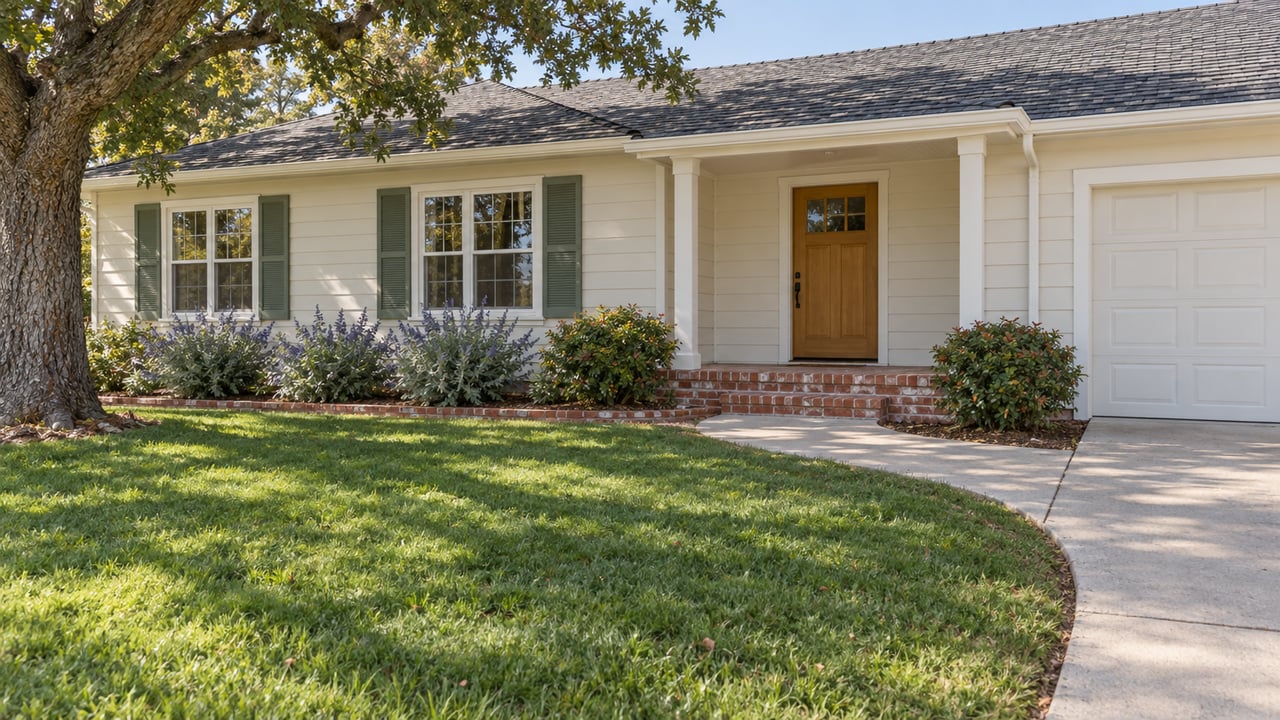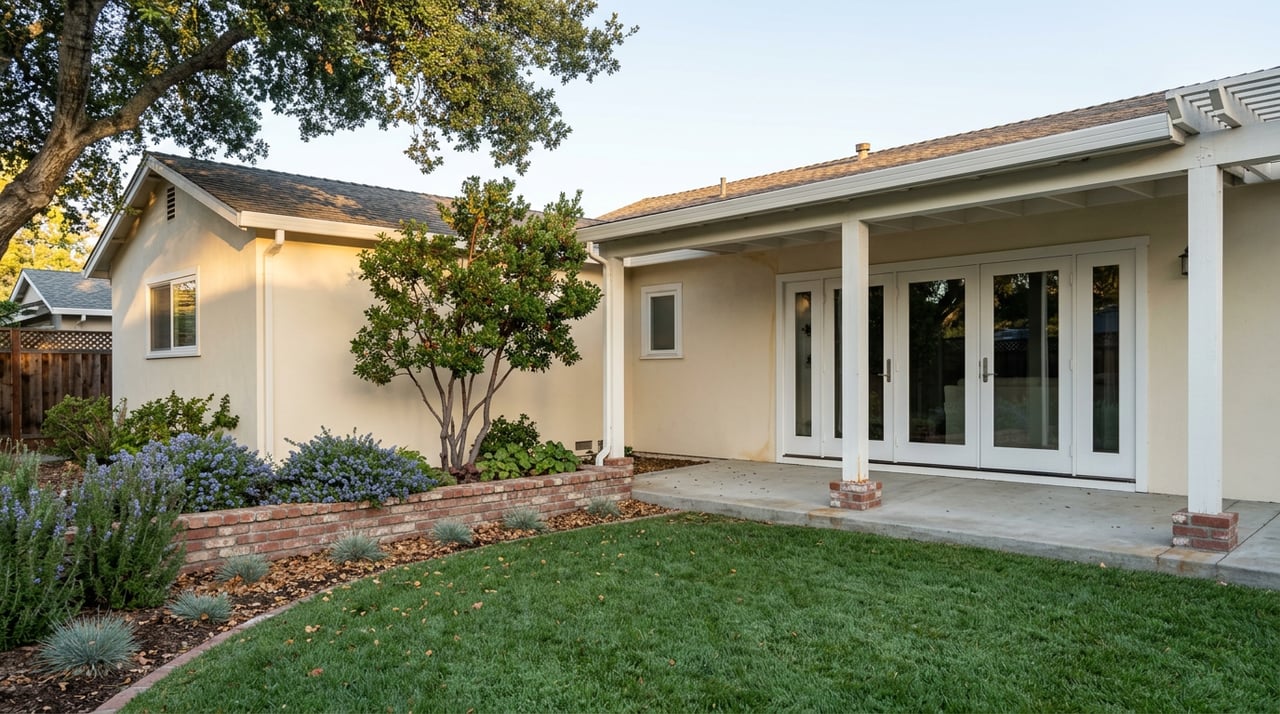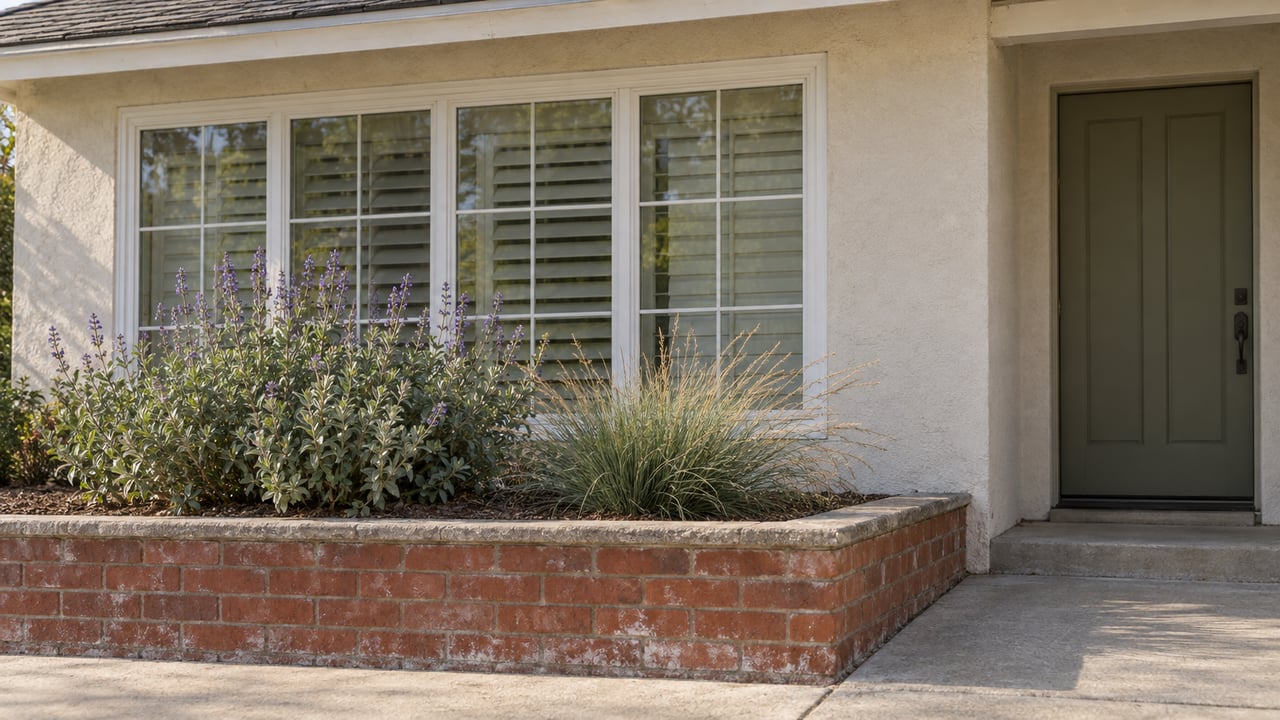
A buyer scrolling listings this fall might see a one-bedroom unit in Rossmoor asking $550,000 and a detached house off Ygnacio Valley Road asking well over $1.8 million, both tagged "Walnut Creek." The temptation is to treat the gap as a quality spread, as if the cheaper one just needs new counters. It doesn't. The two properties sit in different financing systems entirely, and the buyer who assumes they're shopping one market discovers that the hard way, usually somewhere around the fee schedule for the Rossmoor unit, which includes an $18,000 charge that has nothing to do with the sale price.
Walnut Creek gets quoted with a single median price constantly. That number is real, but it's an average of markets that don't bid against each other, don't share financing rules, and don't move together month to month. Understanding why matters more than knowing the number itself.
Same City, Same Month, Two Different Numbers
Movoto's September 2026 data put Walnut Creek's citywide median list price at $749,000, with a median of 41 days on market and $539 per square foot. In that same month, from the same data provider, Rossmoor's own page showed a median list price of $550,000 with a median of 44 days on market and $454 per square foot.
Same source. Same month. A $200,000 gap in the median and a per-square-foot difference of $85. If the citywide figure were describing one coherent market, a submarket that large inside it wouldn't sit that far from the average. It sits there because Rossmoor is not competing with the rest of Walnut Creek for the same buyer, and the citywide number is just the arithmetic result of blending the two together.
The Spread the Median Doesn't Show You
Resideline's market tracking, updated August 29, 2026, followed 653 closed Walnut Creek sales over the trailing six months and put the median closed price at $920,000. The middle half of those sales, the block of transactions that actually represents typical buyer experience, closed between $525,000 and $1,449,000. On a per-square-foot basis, the middle half ran from $474 to $733.
A spread that wide across the middle half of the market, not the outliers, means the median doesn't describe a typical Walnut Creek sale so much as it marks the point where two different distributions happen to overlap. A buyer targeting $920,000 could easily be shopping in a segment where almost nothing closes anywhere near that number.
Why the Number Moves Even When the Market Doesn't
Zillow's home value index for Walnut Creek sat at $1,039,520 as of its June 30, 2026 update, down just 0.2% over the prior year. That's a fairly stable read. Redfin's trailing three-month figure for the period ending July 2026 told a different story: a median sale price of $990,000, up 16.4% year over year, on 303 recorded sales. Movoto's own snapshot for September 2026 put the citywide median list price at $749,000. Three sources, three methodologies, three numbers, all describing the same city in the same general stretch of 2026.
None of these sources are wrong. What's happening is that a small shift in which segment happens to close escrow in a given stretch tilts the blended number. When more attached homes and Rossmoor units close in a particular month, the median drops. When two or three large single-family homes close in the same week, it jumps. The city isn't getting cheaper or more expensive that fast. The mix is just shifting.
The Financing Line That Actually Separates the Segments
The most concrete dividing line in Walnut Creek right now isn't a neighborhood boundary. It's a number set by the Federal Housing Finance Agency. For 2026, Contra Costa County sits among the ten California counties at the high-cost conforming loan ceiling of $1,249,125 for a one-unit property, with a lower "low-balance" conforming threshold of $832,750 beneath that.
Any loan above the ceiling becomes a jumbo loan, with its own underwriting standards and typically a larger down payment. With Walnut Creek's typical home value sitting just above $1 million, an ordinary single-family purchase in this city is often right at the line between high-balance conforming and jumbo financing, while a downtown condo or an attached home priced well under $832,750 is frequently working through standard conventional or FHA underwriting instead. Two buyers targeting the same city end up in front of different loan products, different down payment requirements, and different closing timelines, and the citywide median gives no hint of which one they're in until they've picked a property.
The Rossmoor Wrinkle Nobody Budgets For
Rossmoor deserves its own section because it isn't a neighborhood inside Walnut Creek's market so much as a separate ownership system that happens to sit inside the city limits. The community is governed by 23 separate Mutuals rather than a single HOA, spread across roughly 6,700 units, split close to evenly between co-op and condo ownership.
That co-op share matters because Rossmoor was placed on Fannie Mae's non-warrantable list after the community's master insurance coverage dropped below the threshold Fannie Mae and Freddie Mac require for conventional loan eligibility. A buyer who assumes a Rossmoor purchase works like any other condo loan finds out otherwise partway through the process. Financing generally runs through cash purchases or lenders who specialize in non-warrantable and portfolio loans, which is a different search than most buyers expect to do.
Then there's the entry fee. Rossmoor charges a one-time Membership Transfer Fee that every new resident pays at closing, separate from the purchase price and separate from monthly dues. According to Rossmoor's own real estate information page, that fee was $14,000 as of January 1, 2026, and increased to $18,000 on April 1, 2026. Monthly coupon fees on top of that run roughly $570 to $948 depending on the Mutual and unit type. None of this shows up in a citywide median. All of it shows up in a Rossmoor closing statement.
Reading a Listing Instead of the Headline Number
The practical move for anyone comparing Walnut Creek against another East Bay city, or comparing two Walnut Creek listings against each other, is to stop starting with the citywide median and start with three questions about the specific property: is it co-op, condo, or detached, does the purchase price sit above or below the $1,249,125 conforming ceiling, and does the building or community carry any financing restrictions that would push a buyer toward cash or a specialty lender.
Answer those three questions and the citywide median becomes almost irrelevant, because the number that actually governs the transaction is the one attached to that specific segment. A downtown condo buyer is shopping density and BART access with a conventional or FHA loan. A Rossmoor buyer is shopping a self-contained ownership system with its own fee schedule and its own lender short list. A single-family buyer is almost certainly shopping jumbo or high-balance conforming financing, whether the listing agent mentions it or not.
A Note on Timing
Both ends of the market slowed at close to the same rate this year. Movoto's September 2026 data showed the citywide median sitting a median of 41 days on market, while Rossmoor listings in that same month sat a median of 44 days. The two numbers landing close together suggests the slowdown touched both segments rather than one cooling while the other stayed hot, which is a small piece of evidence that some of what looks like market softening is really just less overall movement, not a change in which segment buyers prefer.
FAQ
Is Walnut Creek currently a buyer's market or a seller's market? It depends entirely on the segment. Detached single-family homes have historically moved faster and with more competing offers than attached housing, while both segments showed similar days-on-market figures in September 2026, which points to a broad slowdown rather than one part of the market losing favor.
Do I need a jumbo loan to buy in Walnut Creek? Only if the purchase price lands above the 2026 Contra Costa conforming ceiling of $1,249,125. Most detached single-family homes in the city sit at or above that line. Condos, attached homes, and much of the Rossmoor market fall well under it, though Rossmoor carries its own separate financing rules regardless of price.
If you're trying to figure out which Walnut Creek segment your budget actually lands in, or what a specific property's financing path looks like before you write an offer, Amanda Lesser and the Lesser Loop team can walk through the numbers with you and tell you what they'd expect to see at closing, not just what the median implies.